Learning Outcomes
i. Understand the sensory roles of the ear in maintaining balance.
ii. Comprehend how the eye contributes to homeostasis through accommodation.
iii. Recognize how these sensory organs help the body adapt to environmental changes.
i. The Ear's Role in Balance
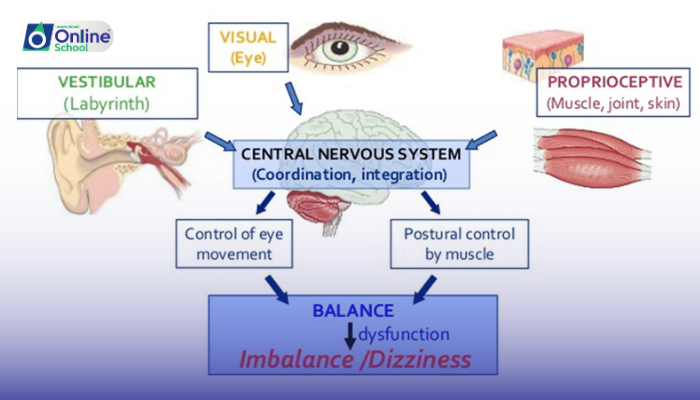
Vestibular System: The inner ear contains the vestibular system, which includes the semicircular canals and the otolith organs that detect rotational movements and linear accelerations, respectively.
Equilibrium: Sensory information about balance and spatial orientation is sent from the vestibular system to the brain, which then coordinates muscle movements to maintain posture and equilibrium.
ii. The Eye's Role in Accommodation
Adjusting Focus: Accommodation refers to the eye's ability to change the curvature of the lens to keep objects in focus, especially as they move closer or further away.
Visual Stability: This adjustment is crucial for maintaining a stable and clear visual field as the eyes move and as objects change distance from the viewer.
iii. Adaptation to Environmental Changes
Balance Adaptations: The vestibular system quickly adjusts to changes in movement and position, such as when starting or stopping walking or turning the head.
Accommodation Adaptations: The eye adapts to different lighting conditions and visual demands, allowing for clear vision across a range of environments and tasks.
In conclusion, the sensory roles of the ear and eye are essential for maintaining homeostasis by adapting to changes in balance and focus. The vestibular system in the ear is critical for balance and spatial orientation, while the eye's ability to accommodate ensures clear vision in varying conditions. These adaptations are crucial for the body's ability to interact with and respond to the environment, highlighting the importance of these sensory systems in daily life. Understanding these processes provides insight into how balance and vision work together to maintain homeostasis and overall well-being.
